The Silent Ledger: Reading Utility Meters as an Early-Warning System for the Home

Photo: Joysmith Eric?, Ministry of Information Photo Division Photographer, Public domain, via Wikimedia Commons
Utility meters are usually consulted for one reason: to send a reading to the supplier. Yet the same figures, recorded at regular intervals, form a quiet record of how a home is behaving. A sudden rise in gas consumption, an electricity reading that refuses to settle overnight or a water meter that keeps turning when no tap is open can point to a fault that is easier and cheaper to address early. For homeowners across the UK, the discipline of reading meters is therefore as much a maintenance habit as a billing one.
Why a Regular Reading Matters
Estimated bills can conceal a great deal. When a supplier relies on estimates, a slow leak, a failing appliance or a heating system working harder than it should may not become visible until a sharp adjustment arrives. Taking a reading at the same time each week creates a baseline against which change can be judged. The purpose is not to challenge every unit of energy or litre of water, but to notice when the pattern departs from what the household expects.
A simple routine is enough. Choose a fixed day and time, read all meters in the same order and record the figures in a notebook or spreadsheet. Where a smart meter or in-home display is fitted, the display can supplement the routine, but it should not replace a manual check of the meter itself. The display shows what the system reports; the meter shows what has passed through it.
Establishing a Baseline
The first two or three weeks are for observation rather than diagnosis. Record the readings, note the weather, whether the heating was on, whether the house was empty for part of the week and whether any appliance was used more than usual. A household that normally uses little electricity may see a rise when a tumble dryer is used heavily; a gas reading will climb as the heating season takes hold. These are ordinary variations. The value of the log lies in distinguishing them from the unusual.
Where possible, take readings at a time when the home is quiet. An evening reading, after the main cooking period, offers a consistent point of comparison. For water, an early-morning reading before bathrooms are used can be particularly revealing.
Electricity: Separating the Obvious from the Suspicious
Electricity readings are relatively straightforward to interpret. A rise across a week may reflect seasonal lighting, extra cooking or the use of portable heaters. The more telling signal is an unexplained load that persists when the house should be quiet. If the meter continues to advance overnight, when few appliances are running, the cause may be a faulty fridge-freezer, an immersion heater left on, a pump running continuously or a piece of equipment that has been overlooked.
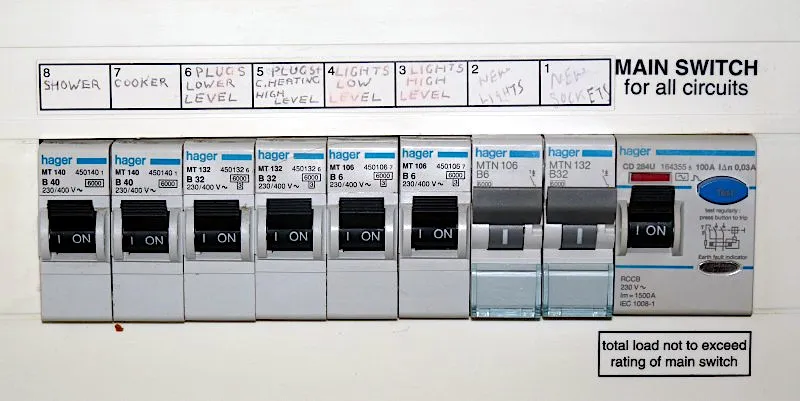
A practical first step is to switch off non-essential appliances at the socket and observe whether the meter slows. Do not open electrical accessories, remove faceplates or investigate the consumer unit beyond resetting a device that is designed to be reset. A burning smell, scorch marks, buzzing or a repeatedly tripping RCD are signs to stop and call a qualified electrician. The meter may have drawn attention to the problem, but it is not a tool for diagnosing wiring.
Gas: Seasonal Expectation and the Pilot of Suspicion
Gas readings are more seasonal. Consumption will rise as the heating is used, and a cold snap can produce a sharp increase that is entirely normal. The question is whether the increase matches the weather and the household's routine. A gas meter that advances noticeably when the heating is off and no gas appliance is in use warrants attention.
Gas safety is not a matter for experimentation. If a gas smell is present, or if a carbon monoxide alarm sounds, the correct response is to leave the property and contact the National Gas Emergency Service on 0800 111 999. Do not operate electrical switches or naked flames. For any investigation of a suspected gas appliance fault, a Gas Safe registered engineer should be appointed. A meter reading can prompt the call; it cannot substitute for the qualified inspection.
Water: The Slow Leak That Never Drips
Water meters are often the most revealing of the three. A leak does not always produce a visible damp patch or a dripping sound. A failed ball valve in a cold-water tank, a leaking toilet flush mechanism or a buried supply pipe can waste significant volumes quietly. The test is simple: when no water is being used, the meter should stop. If it continues to move, water is passing through.
Before assuming a leak, rule out the ordinary. Check that no appliance is filling, that the washing machine and dishwasher are not mid-cycle and that no outside tap has been left running. Then observe the meter over a short period with the stopcock open and all outlets closed. If the meter still advances, record the rate and contact the water supplier or a qualified plumber. The supplier can advise on supply-side responsibilities; a plumber can investigate internal pipework.
Keeping a Household Log
The log need not be elaborate. A single sheet with columns for date, gas, electricity and water readings, plus a short note on weather and occupancy, is sufficient. Keep it with the boiler manual or in the household maintenance file. Over a few months, the log becomes a useful document at service visits, at sale and when a supplier queries consumption. It also provides a record of when a fault was first suspected, which can be helpful if a repair is later disputed.
Deciding When to Call a Trade
The decision to call a qualified trade should rest on pattern and persistence, not on a single high reading. A one-off rise during cold weather or a family gathering is rarely a cause for concern. A sustained increase with no obvious explanation, a meter that moves when the home is quiet or a reading that contradicts the household's normal use is worth investigating. For gas, any suspicion of a leak or appliance fault should be treated as urgent. For water, a meter that will not stop with all outlets closed merits prompt attention. For electricity, repeated tripping, heat or smell requires an electrician without delay.
Meter readings are a modest tool, but they are a reliable one. They do not replace inspections, servicing or safety checks, and they cannot diagnose a fault. Used consistently, however, they give a homeowner an early view of change, allowing a small repair to be arranged before it becomes an expensive one.