Reading the Rain: A Ground-Level Audit of Gutters, Downpipes and Drains

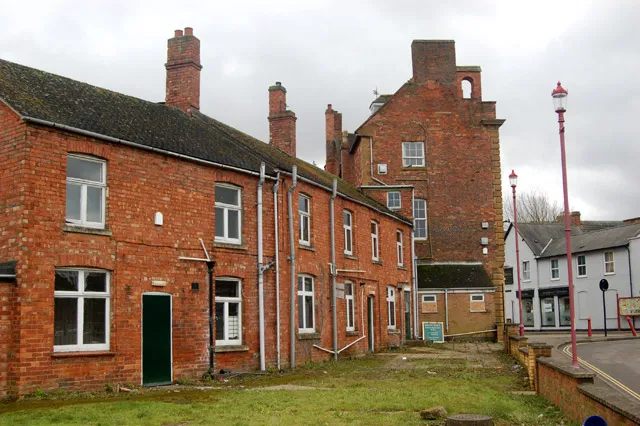
Photo: Hellacious2, CC BY-SA 4.0, via Wikimedia Commons
British weather is not especially dramatic, but it is persistent, and persistence is what tests a building. A property in Manchester or Cardiff may see more than 1,200 millimetres of rain in a year, delivered in hundreds of modest installments rather than a single catastrophe. That rhythm favours slow, cumulative damage: a gutter that overflows on four occasions each winter will, over a decade, leave a mark that no single storm could have made.
The water around a house follows a fixed route. Rain lands on the roof, runs to the gutter, falls to a downpipe, discharges into a gully, and leaves through a drain. Every junction on that route is a potential failure point, and every failure point sits close to something expensive — brickwork, render, fascia boards, sub-floor voids and foundations.
The route, stage by stage
At the roof edge, water collects in a gutter that should be fixed with a gentle fall towards the outlet — commonly around 1:350 for typical half-round profiles, which is a slope so slight it is invisible from below and easily lost when brackets work loose. The gutter hands over to a hopper head or directly to a downpipe, which carries water to ground level and should discharge into a gully below the grating rather than onto paving. The gully connects to the below-ground drain, which carries water to the sewer or to a soakaway serving the property.
Break the chain anywhere and the water does not disappear. It simply finds another route, usually through the fabric of the building.
What you can actually see from the ground
A thorough inspection does not require a ladder. A pair of binoculars and a walk around the property in dry weather will reveal most of what matters.
Look along the gutter line rather than at it — the eye picks up a sag or a dip far more readily than a level. Check that brackets are evenly spaced and firmly fixed; loose brackets usually mean screws have pulled out of a fascia board that is softening rather than a simple mechanical failure. Examine the joints between gutter sections, where sealant and rubber gaskets degrade first. Note whether the downpipe runs straight and whether the swan neck at the top is still connected.
At ground level, look at where each downpipe discharges. A shoe hanging an inch above the gully will splash the wall on every occasion it rains. A pipe discharging directly onto tarmac or a flower bed is not connected to the drainage system at all, and the water is going into the ground next to the footings.
The warning signs most people miss
Green algae streaks and white salt deposits on render or brickwork beneath a gutter joint point to regular overflow rather than a one-off event.
Spalling or blown render at low level often traces back to a gully that surpluses during heavy rain, soaking the base of the wall.
Moss or silt on paving beneath the roof edge suggests a gutter overflowing at that exact point.
A damp patch on an internal wall in an upstairs room, especially at the same height as a gutter run, is frequently misdiagnosed as a roof leak when the gutter joint above is the real source.
Standing water or a smell from a gully indicates a partial blockage downstream, not just surface debris.
Bracket-shaped shadows on the fascia, or visible dark staining behind the gutter, indicate a long-standing overflow.
Slow-draining sinks, baths or toilets can be an early signal of a shared drain beginning to silt up rather than a local trap problem.
Soft or crumbly mortar at a stone plinth, or a damp cellar, in older properties frequently follows years of poor surface water management rather than rising damp.
Simple maintenance that is safe to do
Clear the gutter run of leaves, moss and grit, ideally in late autumn after the bulk of leaf fall and again in spring. Clean the hopper heads, which clog faster than the gutters themselves. Lift gully gratings and remove silt, leaves and fat deposits. Test each downpipe by running a hose into the top and watching the flow at the bottom.
Where a gutter is reachable safely from firm, level ground and at low level, hand clearing with gloves is reasonable. Beyond that, a gutter-cleaning pole or vacuum tool used from the ground is preferable to a ladder. Ladders should be avoided on wet or uneven surfaces, near overhead cables, and on any elevation above a single storey unless you are competent, equipped and confident. In practice, most owners of two-storey homes should not be clearing gutters themselves.
Where a routine task becomes a trade job
Several situations sit firmly outside the scope of a householder. Persistent leaks at gutter joints after resealing suggest the profile has cracked or distorted and needs replacing rather than patching. Gutters that have pulled away from the fascia require the timber itself to be inspected, repaired or replaced before new brackets will hold. Repeated blockages in a below-ground drain usually indicate root ingress, silt build-up or a collapsed section, and need CCTV survey rather than another attempt at rodding.
In England and Wales, drains serving a single property are generally the homeowner's responsibility up to the point where they connect to the public sewer, while shared lateral drains and public sewers fall to the water authority; confirming which applies before commissioning work avoids paying for something that is not yours. Soakaways can silt up and fail, leaving standing water in a garden or against a wall. Cesspits and septic tanks in rural areas need specialist attention when levels rise unexpectedly.
Any damage following a storm, any work at height, and any unresolved damp patch internally should be referred to a qualified trade. Water that has found its way into a wall rarely announces itself at the point of entry.
Timing the audit before the rain sets in
The most useful moment to inspect the water route around a home is late summer and early autumn, before the leaf fall and the first sustained rain arrive, with a second check after the worst of winter has passed. Two short inspections a year, done properly and from the ground, cost very little and address the most common cause of avoidable damp, masonry and foundation problems in UK housing.