The Second Job: Agreeing Making-Good Terms Before the Repair Begins
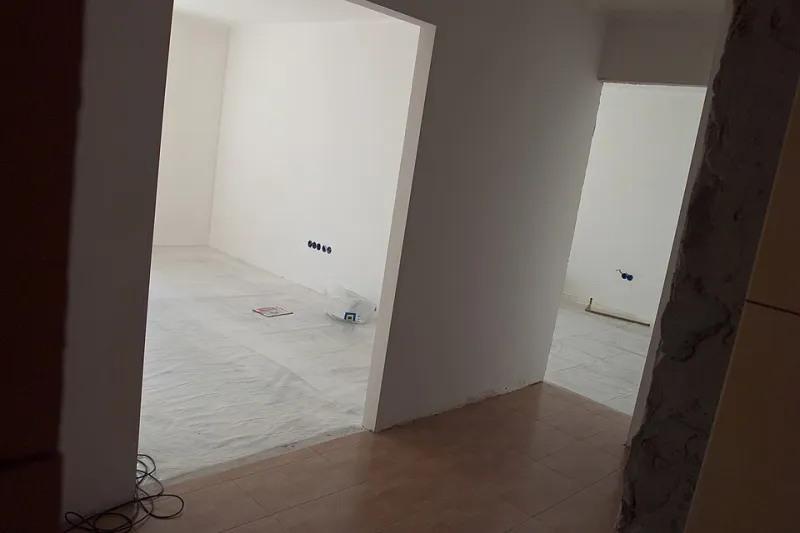
Photo: Vyacheslav Argenberg, CC BY 4.0, via Wikimedia Commons
A repair visit has two outcomes to judge. The first is whether the fault has been corrected. The second is what the room looks like afterwards. The two are not the same, and the gap between them is where most post-repair frustration begins.
An engineer may need to lift floorboards, chase a wall for cable, cut an access hatch, remove sealant, or disturb a run of tiles. Restoring those finishes is usually called making good. Sometimes it is included in the price. Sometimes it is expressly excluded. Sometimes it is left vague, and vagueness is expensive.
What making good actually covers
Making good is the reinstatement of surfaces disturbed by the repair. It commonly includes filling chases and holes, patching plaster, refitting skirting or trim, replacing sealant beads, and clearing the debris created along the way. It does not automatically include redecorating the whole wall, replacing a discontinued tile, or repainting a room to a different standard than it was found.
That distinction matters because a repair can be technically complete while the making good is still outstanding. A filled chase that has not been sanded, a silicone line that has been smeared, or a patch of filler that has shrunk back are all signs that the second job has been treated as an afterthought.
Put the scope in writing before work starts
Most disagreements about making good come from a phrase that sounds generous but means very little: “making good to match existing”. Match in what sense? Colour, texture, flatness, or simply structural soundness? A written scope removes the guesswork. Ask the firm to list the areas it will reinstate, the materials it will use, and the point at which its responsibility ends.
Useful questions include:
- Will the engineer fill and sand, or fill only?
- Is decoration included, or is that for a separate decorator?
- Will the firm supply matching paint, or should the homeowner provide it?
- Are tiles being replaced from the same batch, and what happens if no match is available?
- Is dust extraction or sheeting included, and who removes the waste?
- Will furniture need to be moved, and by whom?
Under the Consumer Rights Act 2015, services must be carried out with reasonable care and skill. That is a useful backstop, but it is not a substitute for agreeing the detail in advance. A clear schedule of works is easier to rely on than a general expectation.
Sequence drying before finishing
Rushing the finish is the most common making-good error. Filler shrinks as it dries, which is why two thin applications are usually better than one thick one. Plaster needs time to dry before it is painted, and the time required depends on thickness, background, ventilation and the manufacturer’s guidance. Painting too early can trap moisture and lead to a patchy or flaking finish that appears weeks later.
Sealant is another area where patience pays. Silicone and caulk should be applied to a dry, clean substrate. Painting over a silicone bead is rarely successful, and filler dust left in a joint will prevent a clean bond. If a repair has introduced moisture, the finishing stage should wait until the area is genuinely dry rather than merely touch-dry.
A practical sequence is straightforward: complete the repair, inspect it, allow the agreed drying period, fill and sand in stages, prime where required, then decorate. Each stage should be signed off before the next begins, particularly where one firm is responsible for both the repair and the finish.
Keep decoration behind the sign-off
There is a temptation to start painting as soon as the engineer leaves. Resist it. Decoration can conceal a defect that would otherwise have been obvious: a hairline crack in a filled chase, a patch of plaster that has not bonded, or a seal that has failed at the first test. Once a wall is painted, the evidence is harder to see and the remedy is more disruptive.
Ask for the making-good items to be recorded separately on the completion sheet. Photograph the area before and after filling, and note any agreed exclusions. If the firm is returning to complete snagging, keep the relevant area clear and unfinished until that visit has taken place.
Agree who returns, and when
Some repairs involve two visits: one to correct the fault and another to finish the surfaces once the work has settled. That is normal, but the return visit should be scheduled rather than assumed. Confirm who is coming back, what they will do, and what the homeowner is expected to provide. If the making good is being handled by a separate decorator, confirm the handover point in writing so that neither trade blames the other for a delay.
It is also worth checking household insurance before work begins. Some policies cover accidental damage caused during a repair, but not the cost of improving a finish beyond its original condition. A brief call to the insurer is cheaper than discovering the exclusion afterwards.
A short pre-start checklist
Before the first tool comes out, confirm the following in writing:
- The areas to be made good, room by room.
- Who supplies paint, filler, sealant and replacement tiles.
- Who removes dust, offcuts and packaging.
- The drying period expected before decoration.
- The sign-off point for the repair, and the separate sign-off for making good.
- The date of any return visit.
A repair is only finished when the room is usable again. Treating making good as part of the job, rather than a favour afterwards, keeps the schedule honest and the finish worth looking at.