Before the First Bag: Planning Repair Waste Without Stalling the Job
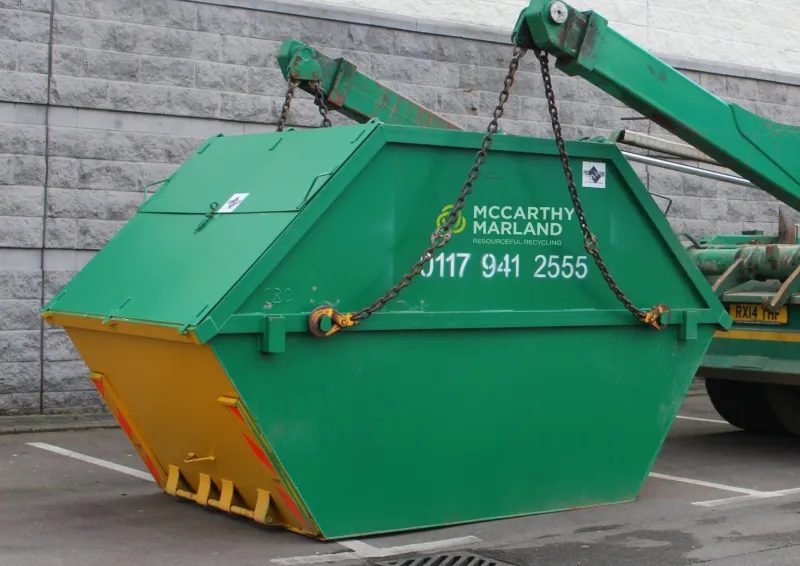
Photo: skip hire container on UK residential driveway with building waste, via media.mccarthywaste.co.uk
A repair project is usually planned around trades, materials and dates. Waste is frequently left until the first bag appears on the drive. That sequence is understandable, but it is also where many jobs lose time. A skip that cannot be placed, a permit that has not been approved or a load that contains restricted material can bring a straightforward repair to a halt. Planning waste before work starts is not Administration for its own sake; it is part of keeping the programme realistic.
Begin with the waste route, not the container
The first question is not which skip to hire, but where each material will go. Some debris can travel in a general skip. Other items require separation, a licensed facility or a specialist collection. Establishing that route early prevents the common situation in which a skip is half full and the remaining waste cannot legally be added.
For any third party removing waste, confirm that the business holds the appropriate waste carrier registration and that a waste transfer note will be provided. This applies to skip companies, removal firms and anyone describing themselves as a man with a van. A low price is not evidence of lawful disposal. Households have a duty of care for waste produced on their property, and documentation is the practical proof that it was handled correctly.
Estimating volume with a margin
Skip sizes are usually quoted in cubic yards, and the labels can mislead. A mini skip may suit a small bathroom strip-out, while a builder's skip is more appropriate for a kitchen removal or a larger garden clearance. Rather than choosing by name, ask the contractor to estimate the number of builder's bags or cubic metres the work will produce. Then add a margin for packaging, offcuts and the material that always appears once a wall or floor is opened.
Weight matters as much as volume. Plasterboard, tiles, soil and concrete are heavy, and a skip filled with them may reach its weight limit before it looks full. Overloading creates two problems: the collection may be refused, and the skip can become unsafe. If the job will produce dense waste, ask whether a different container or a separate collection is more suitable.
A useful check is to divide the work by room or stage. A bathroom replacement, a kitchen alteration and a single door replacement produce very different waste profiles. The estimate should identify bulky items, heavy items and anything that cannot be mixed. That breakdown is more reliable than a single guess at the end of the first day.
Permits, placement and the legal picture
A skip placed on a public road, footway or verge normally requires a permit from the local council. A skip kept entirely on private property may not need one, but that depends on the property and any lease or estate rules. For flats, maisonettes and shared drives, permission from the freeholder or managing agent should be confirmed before placement. Covenants and management rules can restrict containers even when the council is not involved.
Do not assume the skip company will arrange the permit unless this has been agreed in writing. Permit conditions commonly cover the duration, position, lighting and reflective markings. Parking suspensions or traffic restrictions may also apply. Applications can take time, and a permit for the wrong location or dates will not solve the problem on the morning of delivery.
Placement should be considered from the perspective of the whole street. A skip that blocks a dropped kerb, bin access or a pedestrian route creates a dispute quickly. Delivery vehicles need a clear approach, and the skip should not obstruct sight lines. Protective boards under the skip can reduce damage to paving and drives, particularly where the surface is block paving or resin.
Materials that need a separate plan
Plasterboard is a frequent sticking point. It should not be mixed with general waste in an ordinary skip unless the provider has confirmed it can be accepted and separated. Gypsum-based board has specific disposal requirements, and many suppliers will collect offcuts or arrange a dedicated container. Tiles, cement-based products and insulation may also have restrictions.
Old appliances such as fridges, freezers and boilers require separate handling. These are not general skip material. Paint, solvents, aerosols and garden chemicals should not be placed in a mixed load. In older properties, asbestos-containing materials may be present in boards, lagging, floor tiles or roof sheets. If there is any doubt, work should stop and a suitably qualified assessment should be arranged. Putting suspect material into a skip is not a shortcut; it transfers a manageable problem into a regulatory one.
Neighbours, access and the working day
Waste logistics affect neighbours more than many homeowners expect. Skip delivery and collection are noisy, and the container occupies space. A brief note to immediate neighbours before delivery is usually worthwhile, particularly where parking is tight or access is shared. Confirm bin collection days and school-run times so that the skip does not create an avoidable obstruction.
Loose waste should not be left beside a skip. Wind-blown packaging and dust create complaints and can be treated as fly-tipping if left on public land. Agree who will check the area at the end of each working day and who will arrange collection once the skip is full. If the job runs longer than planned, the permit may need extending; that should be checked before the expiry date rather than afterwards.
Contingency and close-out
A realistic waste plan includes a fallback. If the skip cannot be delivered, are heavy-duty bags available? If restricted material is found, who will arrange its collection? If the volume exceeds the estimate, can a second container be added without blocking the drive for another week? These questions are easier to answer before the work starts.
At close-out, keep the waste transfer notes, permit correspondence and any specialist disposal records with the job file. They may be needed if a query arises later, and they form part of the evidence that the work was managed properly. The aim is not to turn a repair into a paperwork exercise, but to ensure that the practical side of clearing up is planned with the same care as the repair itself. When the waste route is settled early, the first bag on the drive is a sign of progress rather than the start of a delay.